
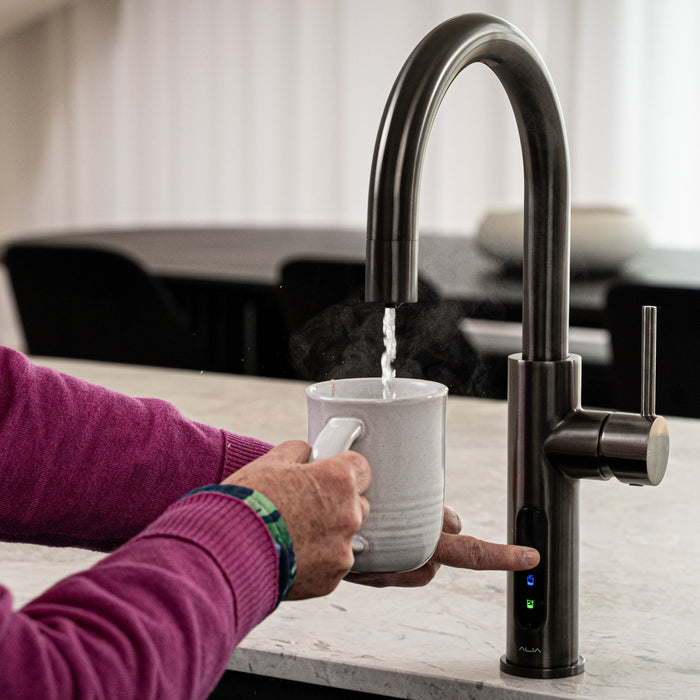
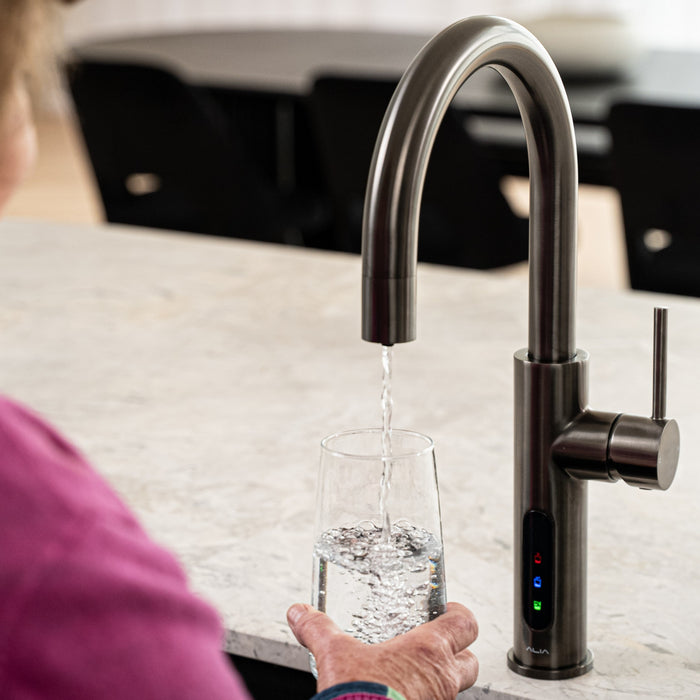
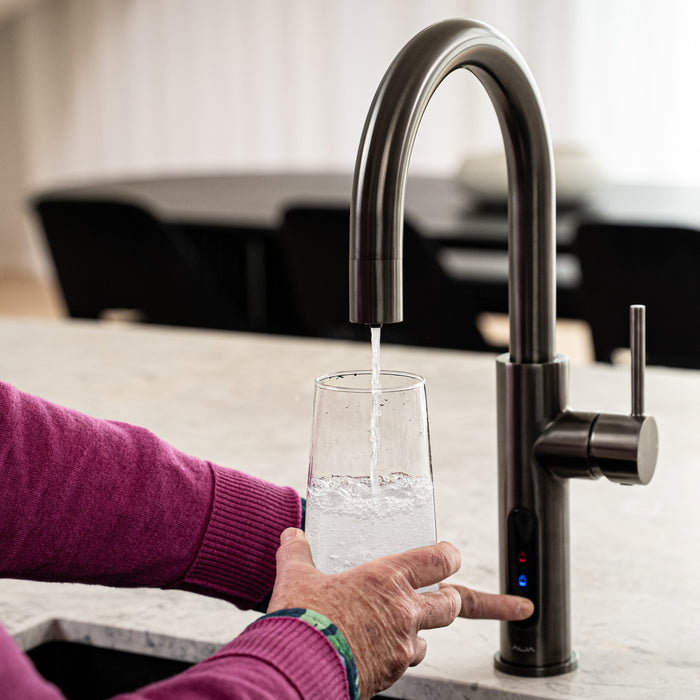


A boiling water tap and a hot water system are not interchangeable. A boiling water tap provides near-boiling filtered water at the kitchen sink, while a hot water system supplies heated water to showers, baths, laundries and other taps throughout the home.
The better choice therefore depends on the job you need to solve. Every occupied home needs a suitable household hot water system, while a boiling water tap is an optional kitchen upgrade for faster drinks, food preparation and selected cleaning tasks.
Key Takeaways
- A boiling water tap is a point-of-use kitchen appliance; a household hot water system serves multiple rooms and fixtures.
- One cannot fully replace the other because they are designed for different temperatures, water volumes and daily tasks.
- Purchase price alone gives a poor comparison. Cabinet space, plumbing, electrical work, energy source, usage and maintenance all affect ownership cost.
- Storage, continuous-flow, heat pump and solar hot water systems have different operating profiles, so there is no single running-cost winner for every Australian home.
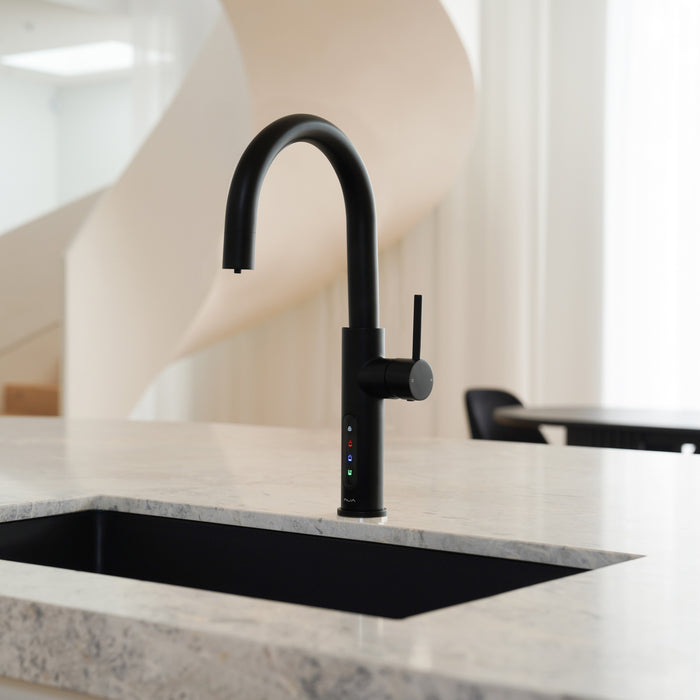
- Alia's boiling water systems add filtered water, adjustable temperature and integrated safety controls to the kitchen, with the Alia 4-in-1 Instant Boiling Filtered Water Tap currently priced at $1,650.
What Is a Boiling Water Tap?
A boiling water tap is connected to a compact heating tank and filtration system installed below the kitchen sink. It holds a relatively small volume of water near boiling point so that hot water is ready when the user activates the dedicated control. This makes it useful for tea, coffee, cooking preparation and other small-volume kitchen jobs that would usually involve a kettle.
The phrase can cause confusion because product temperatures vary. Alia's boiling water taps is adjustable from 35 to 98 °C, so its maximum output is near boiling point under normal conditions. The Alia 4-in-1 Bollente unit uses a 2.4 L tank, has a 1500 W rated element and dispenses up to 1.6 L in one pour. It does not provide a shower-sized supply or feed hot water around the home.
Some kitchen systems combine several water functions within one tap. A customer may choose boiling and ambient filtered water, add chilled water through an instant boiling and chilled water tap, or explore a sparkling water tap for carbonated water at the sink. Each extra function adds equipment below the sink and should be considered during cabinet planning.
What Is a Household Hot Water System?
A household hot water system heats water for bathing, handwashing, laundry and any appliances connected to the domestic hot water supply. It may store heated water in a tank or heat it as water passes through a continuous-flow unit. The energy source can be electricity, gas or solar energy with a booster, while heat pump systems use electricity to transfer heat from the surrounding air.
The Australian Government describes water heating as the second-largest segment of household energy use, accounting for 15% to 30%. Its hot water systems guide also distinguishes between storage systems, which keep a tank hot, and instantaneous systems, which heat water when required. Those operating differences have a much larger effect on household energy use than the presence of a small kitchen boiling tank.
Household systems are sized around occupancy, climate, peak demand and the fixtures they need to serve. A family taking consecutive showers has a very different demand profile from a single resident who uses little hot water. That is why a licensed installer should assess the home before recommending capacity, energy source or a change from one system type to another.
How Does a Boiling Water Tap Differ From a Hot Water System?
The most important difference is scope. A boiling water tap heats a limited supply close to one kitchen fixture, while a household hot water system forms part of the building's plumbing infrastructure. The first is chosen for convenience and filtered drinking water; the second is essential for hygiene and everyday household use.
| Comparison point | Boiling water tap | Household hot water system |
|---|---|---|
| Primary role | Drinks, cooking preparation and selected kitchen tasks | Showers, baths, laundry and general hot water supply |
| Service area | One kitchen sink | Multiple fixtures across the home |
| Typical delivery | Small, controlled pours of near-boiling water | Larger volumes at a temperature suitable for the connected fixture |
| Equipment | Compact under-sink tank, tap and filter | Storage tank or continuous-flow unit, with household pipework |
| Main buying question | Will frequent instant access improve the kitchen routine? | Which system matches household demand, climate and energy supply? |
| Ongoing attention | Filter replacement and system care | Servicing according to system type, manufacturer and local conditions |
This distinction also explains why a direct electricity-cost comparison can mislead. A household hot water system performs far more work and serves more people, so its total consumption will normally be higher. That does not prove the kitchen tap is a substitute or that it will reduce the total bill by a fixed amount.
Can a Boiling Water Tap Replace a Hot Water System?
No. A boiling water tap cannot replace the system that supplies showers, baths, bathroom basins or the laundry. Its small under-sink tank, controlled flow and high delivery temperature are designed for kitchen use, not for distributing tempered hot water through the property.
The two systems can operate alongside each other. The household unit continues to cover high-volume domestic demand, while the kitchen tap handles small pours of filtered, near-boiling water at the point of use. This separation can improve convenience because the user does not need to run a distant hot line or wait for a kettle when preparing drinks and food.
It is also important to check which water stream is filtered. On Alia systems, the dedicated boiling function is filtered. Standard mains water used for washing may follow a separate path, depending on the selected model. Buyers should confirm the exact water modes, filtration path and control layout shown on the current product listing before ordering.
Which Costs Less to Buy: a Boiling Water Tap or a Hot Water System?
There is no useful single market price comparison because these products solve different problems and require different work. A boiling tap purchase usually includes the tap, heating unit and filtration components. Its installed cost can change with available cabinet space, the benchtop material, plumbing access and the presence of a suitable power point.
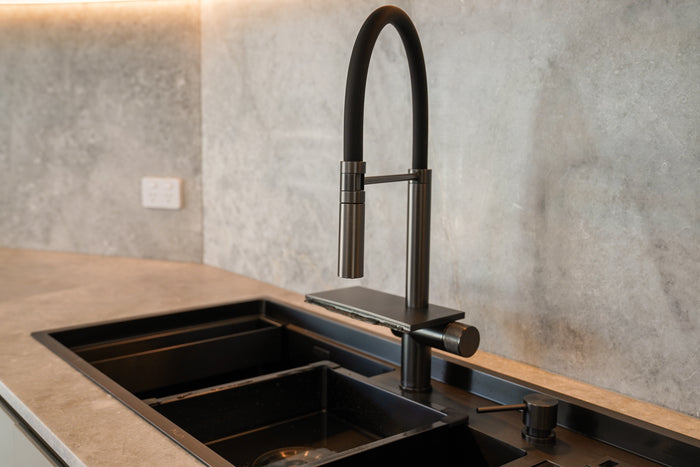
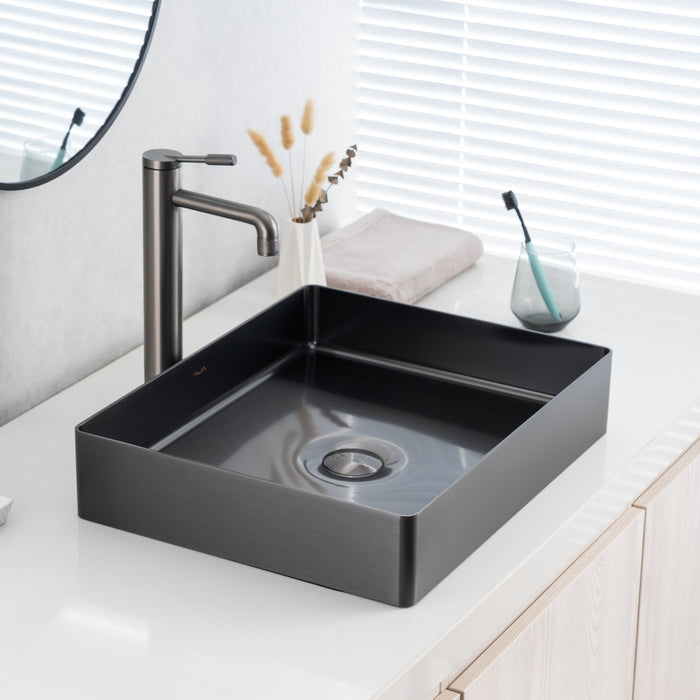
The Alia 4-in-1 Instant Boiling Filtered Water Tap is currently $1,650. It supplies adjustable 35 to 98 °C filtered water plus ambient filtered water and standard mains water through one fixture. The available finishes are brushed gold, brushed nickel, matte black and gunmetal grey. This published price covers the product; installation requirements should be assessed for the individual kitchen.
A household system may involve a direct replacement, a fuel change, new electrical capacity, altered pipework, ventilation, roof-mounted solar collectors or a different tank location. These variables can move the installed cost considerably. Obtain itemised quotes from appropriately licensed trades and compare the complete scope, including removal of the old unit, compliance work and commissioning. Unverified national labour averages are too broad to guide a real project.
Which Uses Less Energy: a Boiling Water Tap or a Hot Water System?
A boiling water tap heats far less water, but it serves a much smaller purpose. Its energy use is shaped by tank insulation, standby heat loss, selected temperature, draw volume and how often the system reheats. A household hot water system must meet bathing and cleaning demand, so consumption is governed by household size, shower habits, climate, system efficiency, pipe losses, tariffs and available solar generation.
System type matters. Storage water heaters lose some heat through the tank, fittings and pipes. Continuous-flow units avoid storage losses but can still experience heat-up and cool-down losses during frequent short draws. Heat pumps can use substantially less energy than conventional electric resistance systems; the Australian Government reports that they may use about 30% of the energy of a conventional electric hot water system, subject to model, climate and usage.
For the kitchen, compare a boiling tap with the appliance it will actually change, usually the kettle. Independent testing has found that a well-used boiling tap and a kettle boiled a small number of times each day can be close in annual electricity cost. Usage behaviour can reverse the result, especially when a kettle is overfilled or a boiling tap remains powered during long absences. Our instant boiling water tap vs kettle guide examines that narrower comparison.
What Installation Does Each System Require?
A boiling water tap needs sufficient room below the sink for the heating tank and filter, access to the cold-water supply, a compliant power point and a suitable opening through the sink or benchtop. Cabinet shelves, waste pipes, bins and drawer runners can all affect the available footprint. Stone benchtops may require specialist cutting, while a retrofit can expose access limitations that were not visible during product selection.
The household hot water system demands a broader assessment. A licensed installer may need to consider the existing energy connection, tank location, drainage, relief valves, ventilation, pipe sizing, electrical load and applicable state or territory requirements. Changing system type can also alter the work substantially. An electric instantaneous system, for example, may require electrical capacity that is not available in every home.
Do not order either product from dimensions alone. Confirm clearances, service access, power requirements and plumbing configuration with the installer. For a boiling tap, keep future filter changes in mind because a technically possible fit may still be awkward to maintain. For a household unit, check whether the selected location allows safe servicing without disrupting other parts of the property.
What Maintenance and Safety Checks Should You Expect?
A filtered boiling tap needs periodic filter replacement, cleaning and any care specified by the manufacturer. Alia's F5000L water filter cartridge costs $150, combines carbon and membrane filtration, and has a published capacity of 10,000 L. Replacement is generally expected every 8 to 12 months, with actual timing affected by water quality and use.
Safety depends on correct installation and deliberate operation. The Alia boiling control uses a dual-action child lock: hold the lock for two seconds, then hold the boiling control to dispense. The tap range is lead free, WaterMark approved under WMK26897 and AS 3718 compliant, with a two-year warranty. Users should still keep vessels stable below the spout and supervise children around near-boiling water. The instant hot water tap safety guide covers day-to-day handling in more detail.
Household hot water maintenance varies by technology. Storage systems may require inspection of valves and, for some tank materials, sacrificial anodes. Heat pumps have compressors and fans, while solar systems add collectors and booster controls. Follow the manufacturer schedule and use licensed trades where required. A fault affecting pressure, temperature or relief discharge needs professional attention.
Which Option Is Better for Your Home?
Choose or upgrade the household hot water system first if the property lacks reliable hot water, the current unit is failing, capacity no longer matches occupancy, or energy use is a concern. This is core infrastructure. A qualified installer can compare storage, continuous-flow, heat pump and solar options against local climate, tariff structure, available space and the home's electrical or gas services.
Consider a boiling water tap when the household system already performs properly and the kitchen routine justifies a dedicated appliance. Strong use cases include frequent tea and coffee preparation, repeated cooking tasks, a busy family kitchen or a shared workplace where kettle queues interrupt the day. A compact kitchen with limited benchtop space may also benefit when the tap removes the kettle and filter jug.
If cold drinking water is part of the goal, assess the full configuration before buying. Alia's instant chilled water tap range delivers chilled water at 8 to 12 °C on current systems. The Alia 4-in-1 Instant Boiling and Chilled Filtered Water Tap is currently $2,500. It requires room for both the heating and chilling equipment, and each unit requires its own power point.
Alia Boiling Water Taps for the Kitchen
Alia focuses the benefit where it is most useful: filtered, near-boiling water available at the kitchen sink without a separate kettle occupying the benchtop. Adjustable output from 35 to 98 °C supports different drinks and preparation tasks, while the 1.6 L maximum pour places a clear boundary around the system's intended point-of-use role.
The Alia 4-in-1 Instant Boiling Filtered Water Tap is $1,650 and pairs its 2.4 L Bollente tank with multi-stage filtration, four finish choices and a dual-action child lock. WaterMark approval, AS 3718 compliance, lead-free construction and a two-year warranty give buyers specific product credentials to check against project requirements. The published specification should still be reviewed with the installer before purchase.
Customers who want a broader kitchen water setup can compare boiling-only, boiling-and-chilled and sparkling configurations across Alia Global. The most suitable configuration is the one that matches real daily use and fits the cabinet correctly. More functions may be appealing, but each one needs space, power and ongoing consumables.
Frequently Asked Questions
Is a boiling water tap the same as an instantaneous hot water system?
No. A boiling water tap is a point-of-use kitchen appliance that keeps a small quantity of filtered water ready at up to 98 °C on current Alia models. An instantaneous household hot water system heats water as it flows and supplies domestic fixtures such as showers and basins.
Does a boiling water tap reduce household hot water bills?
It may change energy and water use for selected kitchen tasks, but no fixed saving applies to every home. The result depends on kettle habits, boiling-tap use, electricity tariffs, standby losses and whether the household hot water line was previously used for those tasks. It does not remove the need to heat water for showers, laundry or general cleaning.
Can an Alia boiling water tap supply a full saucepan?
The current Alia 4-in-1 boiling system dispenses up to 1.6 L per pour from its 2.4 L Bollente tank. That is suitable for many drink and cooking-preparation tasks, although a larger vessel or repeated draw may require recovery time. Check the required volume against the current specification before purchase.
How often does the Alia boiling tap filter need changing?
The $150 F5000L filter has a published capacity of 10,000 L and is generally replaced every 8 to 12 months. Local water conditions and actual consumption can shorten or extend the practical interval, so follow the product guidance and monitor water quality and flow.
Do I still need a kettle after installing a boiling water tap?
Many households can remove the kettle when the tap's temperature, pour volume and recovery pattern suit their routine. Keeping a kettle can still be useful during a power interruption or when a task needs more water than the tap can dispense comfortably in one pour.
Bring Faster, Filtered Water to Everyday Kitchen Tasks
The boiling water tap versus hot water system decision becomes clear once each product is assigned its proper job. The household system remains responsible for bathing, washing and high-volume domestic supply. A boiling water tap adds fast, filtered water at the kitchen sink, where minutes spent filling, boiling and clearing a kettle can be removed from repeated daily tasks.
For a renovation or retrofit, start with the practical checks: measure the cabinet, identify plumbing and power access, decide which water functions will be used, and ask a licensed installer to confirm the site. Then compare the current Alia range with the complete installed scope in view. The result is a kitchen upgrade chosen for measurable everyday value, with the home's essential hot water infrastructure left to do the work it was designed for.